
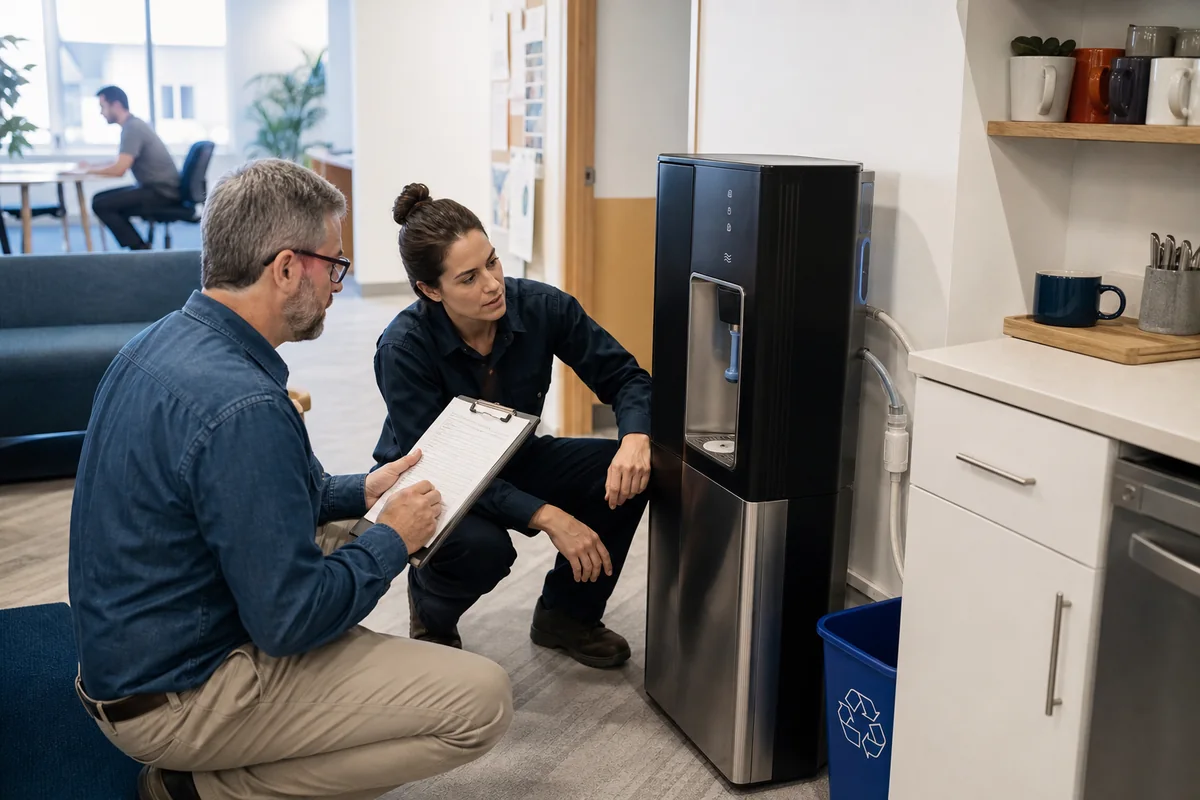
Office water service keeps fresh drinking water available while giving your business a choice of bottled delivery, bottleless coolers and filtration. Compare office water service prices, equipment and local providers in one place. Whether you need office water service for a small team or several busy locations, request free quotes and choose the office water service that fits your workplace and budget.
Compare Office Water Service for Your Business
Find office water service that gives your team convenient drinking water at a price you can compare.
A useful water-service proposal begins with the building and the people who use it. Record employees by shift, typical daily attendance, visitors, customer traffic, meeting patterns and seasonal changes. A conventional office with predictable weekday attendance has different peak demand from a clinic, warehouse, school office, call center or multi-shift facility. Hybrid schedules can produce quiet days and concentrated high-attendance days that an average headcount hides.
Map each break room, reception area, production floor and customer-facing space where drinking water is needed. Note the walking distance between those areas and the number of people likely to refill at the same time. A single dispenser may technically serve the total headcount but still create queues or long trips. Several smaller points of use may be more practical, while one high-capacity unit may work well in a central, easily reached location.
Document building conditions before choosing equipment. Bottled service needs receiving access, secure storage and a safe path for moving full and empty containers. Bottleless equipment needs a compatible potable cold-water connection, power, a practical tubing route and room for filter and equipment service. A site walk-through should also identify shutoff access, elevator or loading restrictions, landlord approval and any area where a leak would create an unusual risk.
The answer on choosing an office water cooler size helps translate headcount and peak use into a more useful capacity discussion. The goal is not a perfect forecast on day one. It is a documented starting requirement that can be checked against real use after installation.
Office Water Service Options: Bottled and Bottleless
Compare bottled office water service with bottleless office water service before choosing your cooler and monthly plan.
Most workplace programs use either scheduled bottled water delivery or a bottleless point-of-use cooler. Some organizations use both: bottleless equipment at permanent high-use locations and bottled service where plumbing is impractical or temporary demand changes quickly. The correct choice depends on the building, incoming water, storage, delivery access, desired temperatures and the facilities team’s preferred service model.
A complete office water delivery service page explains bottle estimates, route schedules, storage and cooler responsibilities in detail. Workplaces considering plumbed equipment should use the bottleless water service guide to compare filtration, installation, maintenance and contract terms.
Do not reduce the decision to “bottles versus no bottles.” Compare daily operations. Bottled delivery requires receiving, bottle handling and inventory management but avoids permanent plumbing work. Bottleless service reduces jug storage and lifting, yet the office depends on the building water supply, the specified filters and a responsive maintenance program. The useful question is which set of responsibilities fits the workplace better.
Choose Office Water Service for Your Team Size
Office water service should match your employee count, busiest breaks and the number of coolers you need.
Employee count is a starting point, not a complete capacity specification. Attendance by shift, physical activity, climate, visitor volume, coffee and tea preparation, meeting traffic and access to other drinking water all influence use. Ask how the supplier converts those inputs into bottle quantities or dispenser capacity, and require the assumptions to appear in the proposal.
For existing service, collect several normal weeks of invoices, bottle returns or dispenser-use observations. Record shortages, unused inventory, queueing and high-demand periods. For a new location, begin with the best available headcount and operating schedule, then require a formal review after the first complete billing or delivery cycle. For point-of-use equipment, the FAQ on bottleless cooler output explains why daily capacity and peak demand must be considered together.
Capacity also includes recovery and dispensing speed. A cooler may hold enough cold water for normal daily use but struggle when many employees refill during one break. Hot-water demand can be similarly concentrated in offices that use the dispenser for tea or instant food. Ask for the proposed model, storage and heating capacities, expected recovery and any assumptions about simultaneous use.
Information every office water company should receive
- Typical and peak attendance by day and shift
- Visitors, meetings, training and seasonal demand
- Number and placement of desired dispensing points
- Cold, hot and ambient water requirements
- Existing bottle use, service records or recurring shortages
- Plumbing, power, delivery access and storage constraints
- Expected changes in occupancy or floor layout
Review actual performance after launch. For bottled delivery, count full bottles, empties and emergency purchases. For bottleless service, track slow flow, temperature recovery, filter visits, downtime and service calls. Adjusting a documented plan is more reliable than keeping an undersized or wasteful setup because it was the original order.
Office Water Service with Filtered Drinking Water
Compare office water service with filtration selected for your workplace water and preferred cooler features.
Terms such as “pure,” “premium” and “advanced filtration” do not identify what a system actually does. A bottleless proposal should name the filter stages, model numbers, replacement intervals and the condition each stage is intended to address. Sediment filtration, activated carbon, reverse osmosis and specialty treatment are different tools. The appropriate configuration depends on the incoming water and the workplace’s defined objective.
Ask whether the supplier reviews available water-quality information or recommends testing when a specific concern requires it. Confirm how filters are selected, who changes them, what service record remains and how the company responds to unusual taste, odor, reduced flow or an overdue change. The guide to office water filtration systems explains the point-of-use process, while the cost answer covers office filtration system pricing.
For bottled service, identify the water type, container size, bottle deposit rules and procedures for damaged or unsealed containers. Storage and handling can affect the practical quality of the program even when the product arrives sealed. Keep bottles protected from chemicals, excessive heat and direct sunlight, and separate full inventory from empties awaiting pickup.
Office Water Service Installation and Coolers
Ask for office water service quotes that include cooler placement, installation and the work needed at your address.
A site survey should occur before a bottleless cooler is promised. The survey should confirm the water source, tubing route, electrical outlet, shutoff location, clearance for filters and service, drainage when required, floor protection and landlord or facilities approval. Ask who performs the installation, how the connection is tested and what documentation the office receives. The answer on office water cooler installation time identifies the building details that can shorten or delay the work.
Bottled coolers need planning too. Confirm who places and levels the dispenser, who makes the first bottle change, where replacement bottles will be stored and whether the provider moves equipment between floors. Position every cooler on a stable surface near suitable power, with enough room for bottle changes, cleaning and repair. Avoid locations where a small spill could reach sensitive equipment or create a difficult walking hazard.
Placement should support use without disrupting work. Reception areas may need a quiet, clean-looking unit. Warehouses and production spaces may require durable equipment and several accessible locations. Multi-floor offices need a deliberate choice between one delivery point and distributed service. Record approved equipment locations so a driver, installer or replacement technician does not improvise later.
Office Water Service with Maintenance and Support
Choose office water service with clear filter replacement, cleaning and repair coverage.
Office water equipment is an ongoing service responsibility, not a one-time purchase decision. The written plan should state who cleans and sanitizes the dispenser, how often routine visits occur, which filters or parts are replaced, what records are kept and how employees report a problem. Compare those commitments before comparing service prices.
Preventive work should match the equipment and manufacturer requirements. Ask the provider to name the routine tasks rather than simply promising “maintenance included.” The FAQ on water cooler maintenance outlines the questions to ask, and the sanitation guide explains cleaning and sanitizing schedules.
Define the response to leaks, unusual taste, slow flow, temperature problems, empty inventory and complete downtime. Employees need one contact method and clear first steps, including how to shut off a bottleless system when appropriate. The agreement should state response targets, business hours, emergency procedures, replacement-equipment rules and whether backup bottled water is available.
Keep service records by unit and location. Record installation date, model and serial number, filter specifications, sanitation visits, repairs and open issues. Multi-location organizations benefit from one inventory format even when local service companies or route schedules differ. Consistent records make recurring failures and missed maintenance easier to identify.
Compare total office water service cost
Compare office water service prices with the same equipment and support included in every quote.
Monthly price matters, but it must be attached to the same scope. Bottled plans can include bottle charges, cooler rental, route fees, minimum orders, bottle and equipment deposits, sanitation, fuel or environmental fees and supplemental deliveries. Bottleless plans can include equipment rental, installation, plumbing work, filters, sanitation, preventive service, repairs and removal. Ask each provider to separate one-time and recurring charges.
Include internal operating work. Bottled service uses receiving time, storage space, inventory checks and bottle handling. Bottleless service requires access for installation and maintenance, issue reporting and coordination when the building water or equipment is unavailable. These factors do not automatically favor one system; they make the comparison complete.
Build a twelve-month view using normal demand, peak periods and known occupancy changes. Then review the contract term, automatic renewal, annual price changes, service exclusions, relocation, early termination and equipment removal. The office water service pricing guide provides a structured cost comparison, and the FAQ on monthly water service cost helps organize recurring charges.
A promotional number is not enough if it covers different work. Require suppliers to show assumptions and exclusions in writing. If one proposal includes installation, sanitation and repairs while another does not, price the missing work before ranking them.
Compare office water service companies with the same requirement
Get office water service quotes from providers that can serve your location and compare the complete monthly plan.
Send every prospective company the same workplace brief. Ask each to respond with the proposed equipment or bottle plan, capacity assumptions, installation work, service calendar, repair process, backup arrangements, complete pricing and contract terms. A consistent request makes differences visible and reduces the chance that suppliers are solving different problems.
Evaluate local coverage, not just a national sales promise. Confirm the delivery day or technician coverage for the actual address, building access requirements and escalation contact. References are most useful when they describe invoice accuracy, route consistency and problem resolution for workplaces with similar equipment and demand.
Review what an office water contract includes before accepting terms, then use the question on comparing local water companies to structure the final supplier review. A professional provider should be able to explain the proposed operating plan without hiding important responsibilities behind a generic package.
Office water service questions
What does an office water service usually include?
It may include bottled water delivery, a rented or purchased cooler, bottle pickup, point-of-use filtration, installation, scheduled filter changes, sanitation, preventive maintenance and repairs. Inclusions vary, so the proposal should name every product and responsibility rather than relying on the phrase “full service.”
Is bottled or bottleless water service better for an office?
Neither is universally better. Bottled service can fit spaces without approved plumbing but requires delivery, storage and handling. Bottleless service reduces bottle logistics but requires compatible building water, installation, filtration and scheduled maintenance. Compare the operational requirements at the actual site.
How many office water coolers does a workplace need?
The answer depends on attendance, peak refill periods, floor layout, walking distance and dispenser recovery—not headcount alone. Map demand by area, specify the proposed equipment and review performance after installation.
What should an office water service contract state?
It should state equipment, water or filtration, service frequency, sanitation, maintenance, repair response, all charges, term, renewal, price changes, relocation, cancellation and equipment-removal responsibilities.
How should a business choose an office water company?
Give several companies the same written requirement and compare the evidence behind capacity, local service coverage, maintenance, total cost and contract flexibility. The best fit is the provider whose documented plan matches the workplace and remains clear after the sale.